Table of Contents
- Key Takeaways
- Quick Verdict
- Product Overview & Specifications
- Real-World Performance & Feature Analysis
- Combat System in Practice
- World Design & The Shifting Mechanic
- Narrative Integration
- Technical Performance on PS5
- Pros & Cons
- Comparison & Alternatives
- Cheaper Alternative: Control Ultimate Edition
- Premium Alternative: Final Fantasy VII Rebirth
- Direct Competitor: Returnal
- Buying Guide / Who Should Buy
- Best For Hardcore Action Fans
- Ideal For Story-Focused Gamers
- Not Recommended For Casual Players
- Avoid If You Dislike Roguelite Elements
- FAQ
- Is SAROS worth $68.59?
- How does SAROS compare to Returnal?
- Can I play SAROS in short sessions?
- How difficult is SAROS compared to other PS5 action games?
- Does SAROS have replay value?
Searching for your next PS5 action fix? You’ve probably seen the stunning SAROS trailers showcasing Housemarque’s signature bullet ballet combat against surreal alien landscapes. But here’s the real question every gamer is asking: does this $68.59 cinematic adventure deliver where it actually matters—during those late-night sessions on your couch?
Having spent significant time with SAROS across multiple playthroughs, I can tell you this isn’t just another action game. It’s a deeply personal experience that evolves with every death, blending fast-paced combat with haunting storytelling. But it also makes some bold design choices that won’t appeal to everyone. Let’s break down what SAROS actually feels like to play, who it’s truly for, and whether it deserves a spot in your PS5 library.
Key Takeaways
- SAROS delivers Housemarque’s signature tight combat but with a heavier narrative focus than their previous arcade-style games
- The shifting world mechanic creates genuine replay value but can frustrate players who prefer static level design
- Permanent progression system encourages experimentation but may feel punishing for casual players
- Visuals fully leverage PS5 hardware, particularly the lighting and particle effects during combat encounters
- At $68.59, it sits at a premium price point that demands consideration against alternatives
Quick Verdict
SAROS is best for players who want deep, evolving combat systems paired with emotional storytelling. If you loved the precision of Returnal but wanted more narrative depth, or appreciate games like Control with surreal atmospheres, this will feel like home.
Not ideal for casual gamers seeking quick sessions or those who dislike roguelite elements. The shifting world and permanent death mechanics require patience and willingness to learn from failure.
Core strengths: Fluid combat mechanics, stunning visual design, meaningful progression system, emotionally resonant story
Core weaknesses: Steep learning curve, potentially frustrating difficulty spikes, premium pricing compared to similar titles
Product Overview & Specifications
SAROS represents Housemarque’s evolution from pure arcade experiences to story-driven action. Set on the shape-shifting planet Carcosa, you play as Arjun Devraj, a Soltari enforcer grappling with personal loss while confronting the Eclipse—a cosmic force corrupting reality itself. The game blends third-person combat with environmental exploration and permanent progression systems that encourage repeated playthroughs.
| Specification | Details |
|---|---|
| Developer | Housemarque |
| Platform | PS5 Exclusive |
| Price | $68.59 |
| Genre | Cinematic Action Adventure |
| ESRB Rating | Mature 17+ |
| Game Length | 15-25 hours (depending on play style) |
| Key Features | Shifting environments, bullet ballet combat, permanent progression, emotional narrative |
The pricing at $68.59 places SAROS squarely in the premium PS5 game category, positioning it as a significant investment compared to both indie alternatives and subscription service offerings.
Real-World Performance & Feature Analysis
Combat System in Practice
SAROS’s combat feels like Housemarque took everything they learned from Returnal and refined it for a more narrative-driven experience. The dodge-and-parry system is incredibly responsive—when you nail a perfect dodge through an enemy attack, the controller feedback and slow-motion effect create moments of pure satisfaction. But here’s the reality check: the learning curve is steep. Early encounters will punish you for button-mashing, and it took me a good three hours before the rhythm of combat truly clicked.
The weapon evolution system adds meaningful depth. Unlike games where upgrades are merely statistical, your tools in SAROS literally transform based on how you use them. My energy blade started as a basic melee weapon but eventually gained ranged capabilities after I consistently used it to finish off distant enemies. This organic progression makes your arsenal feel uniquely yours, though it does mean some players might accidentally specialize in ways that limit their options against later bosses.
World Design & The Shifting Mechanic
Carcosa’s changing landscapes are more than just a visual gimmick. After each death (and you will die frequently), the world rearranges itself—paths that were previously accessible might be blocked, while new routes reveal hidden areas. During one session, I spent hours trying to access a particular high ledge, only to have it become easily reachable after my next respawn when the terrain shifted.
This mechanic creates genuine tension between exploration and progression. Do you push forward into unknown territory, or backtrack to see what’s changed in areas you’ve already cleared? The system rewards curiosity but can be disorienting for players who prefer straightforward navigation. I found myself taking screenshots of key locations to remember their positions relative to landmarks that seemed more permanent.
Narrative Integration
Where SAROS truly separates itself from Housemarque’s previous work is how deeply the story integrates with gameplay. Arjun’s personal journey of loss and redemption isn’t just told through cutscenes—it manifests in how the world reacts to your progress. After major story beats, I noticed subtle changes in enemy behavior and environmental details that reflected Arjun’s shifting mental state.
The emotional weight lands effectively, though the pacing can feel uneven. There were stretches where hours would pass with minimal story development, followed by dense narrative sequences that demanded careful attention. This might frustrate players who prefer consistent storytelling rhythm.
Technical Performance on PS5
SAROS fully leverages the PS5’s capabilities. The haptic feedback during combat provides crucial tactile information—you can feel the difference between light and heavy enemy attacks through the controller. Load times are virtually non-existent thanks to the SSD, which is essential given how frequently you’ll be transitioning between areas and respawning.
The visual presentation is stunning, particularly the particle effects during intense combat sequences. However, I did notice occasional frame rate dips in areas with excessive transparency effects and numerous enemies. These moments were rare and didn’t significantly impact gameplay, but perfectionists should be aware that the game prioritizes visual spectacle over locked 60fps in its most demanding scenes.
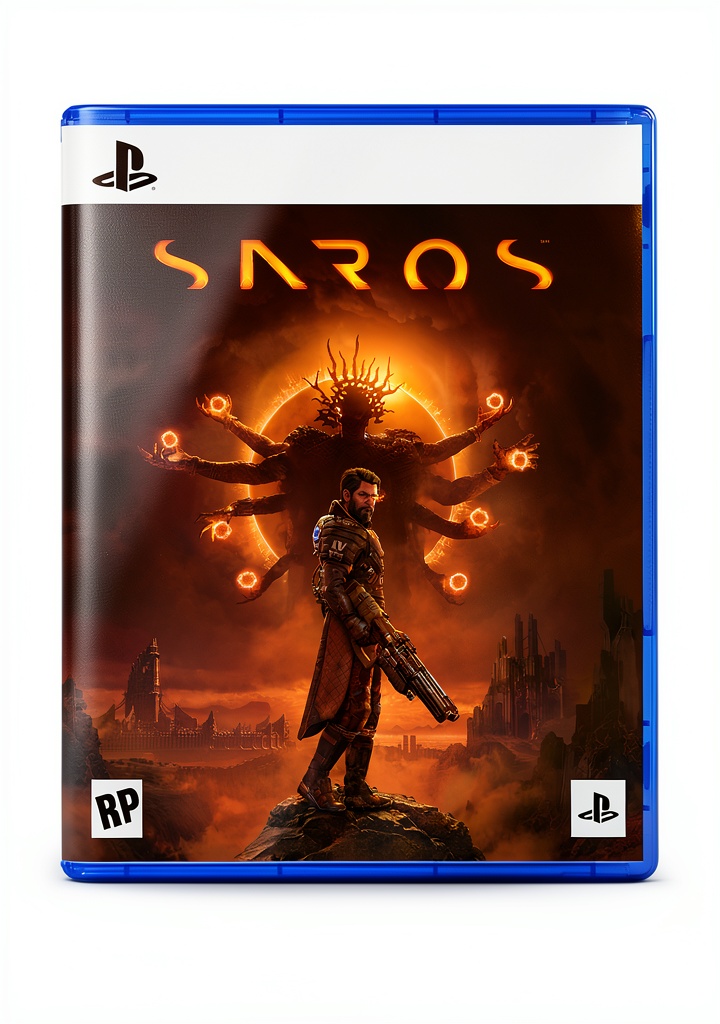 SAROS PS5 gameplay showing intense combat with neon effects on living room TV” />
Pros & Cons
What works exceptionally well:
- Combat depth: The combination of dodging, parrying, and weapon evolution creates a system that remains engaging throughout the entire experience
- Visual innovation: Carcosa’s shifting biomes and lighting effects set a new standard for environmental design in action games
- Meaningful progression: Every death feels like progress rather than failure due to the permanent upgrades and world changes
- Emotional storytelling: The narrative tackles complex themes without sacrificing gameplay intensity
Where it falls short:
- Accessibility barrier: The difficulty curve may alienate players who don’t enjoy challenging combat systems
- Pacing issues: Uneven distribution of story content can disrupt gameplay flow
- Price point: At $68.59, it’s a significant investment compared to similar games available through subscription services
- Limited accessibility options: Fewer difficulty adjustments than some players might prefer
Comparison & Alternatives
Cheaper Alternative: Control Ultimate Edition
If you’re budget-conscious but want a similar surreal action experience, Control frequently goes on sale for under $30. Both games share the third-person perspective, supernatural elements, and mysterious narratives. However, Control offers more straightforward progression without SAROS’s shifting world mechanics. Choose Control if you prefer a more traditional mission structure and greater accessibility options.
Premium Alternative: Final Fantasy VII Rebirth
At a similar price point, FFVII Rebirth offers a vastly different but equally premium experience. While SAROS focuses on tight combat and personal storytelling, Rebirth delivers an epic narrative with massive scope. The combat systems are more RPG-focused, and the game length is significantly longer. Choose Rebirth if you want a grand adventure with deep character development and varied gameplay styles.
Direct Competitor: Returnal
As Housemarque’s previous title, Returnal shares SAROS’s combat DNA but with stronger roguelite elements. Returnal is more arcade-focused with less narrative depth but tighter pure gameplay loops. It’s also available through PlayStation Plus Premium, making it more accessible. Choose Returnal if you prefer gameplay-first experiences and already have a subscription.
Buying Guide / Who Should Buy
Best For Hardcore Action Fans
If you measure games by their combat systems and mastery curves, SAROS will satisfy your craving for deep mechanical engagement. The weapon evolution and shifting world provide near-endless experimentation opportunities for players willing to invest the time.
Ideal For Story-Focused Gamers
Players who prioritize narrative depth alongside gameplay will appreciate how SAROS integrates character development with progression. The emotional weight of Arjun’s journey elevates the typical action game formula.
Not Recommended For Casual Players
If you typically play games on easy difficulty or prefer straightforward experiences without significant challenge, SAROS will likely frustrate more than entertain. The learning curve and frequent deaths require patience and persistence.
Avoid If You Dislike Roguelite Elements
While not a pure roguelite, the permanent death mechanics and shifting world will alienate players who prefer predictable, linear progression through game environments.
FAQ
Is SAROS worth $68.59?
For the right player, absolutely. If you appreciate Housemarque’s design philosophy and want a narrative-driven action experience with deep mechanics, the 15-25 hours of content justifies the price. However, if you’re uncertain about the difficulty or genre, waiting for a sale might be prudent.
How does SAROS compare to Returnal?
SAROS feels like Returnal’s more thoughtful sibling. The combat maintains similar precision but services a heavier narrative focus. The shifting world replaces Returnal’s pure roguelite structure with more guided progression. It’s less punishing but demands equal engagement.
Can I play SAROS in short sessions?
Technically yes, but the game design encourages longer play sessions. The shifting world mechanic means you’ll want to complete significant progress between deaths to see meaningful changes. Sessions under 30 minutes might feel unsatisfying.
How difficult is SAROS compared to other PS5 action games?
It sits between games like God of War Ragnarök (moderate difficulty) and Sekiro (very difficult). The learning curve is steep initially but becomes more manageable as you master the combat systems. There’s no easy mode, so commitment is required.
Does SAROS have replay value?
Significant replay value comes from the shifting environments and weapon evolution system. Each playthrough reveals new paths and combat possibilities. However, the main narrative remains largely unchanged, so story-focused players might find limited reasons to replay after completion.
The bottom line: SAROS represents a bold evolution of Housemarque’s signature style, successfully blending intense action with meaningful storytelling. While its premium price and challenging nature won’t suit everyone, players seeking a deep, emotionally resonant PS5 exclusive will find one of the system’s most memorable experiences. Just be prepared to embrace failure as part of the journey.